
First impressions are formed in a matter of seconds, and when it comes to your home, that impression begins right at the curb. Whether you are preparing to list your property on the real estate market or simply want to feel a sense of pride every time you pull into your driveway, elevating your home’s exterior aesthetic is one of the most rewarding home improvement projects you can undertake. A well-maintained exterior signals to guests, neighbors, and potential buyers that the entire property has been cared for with diligence and pride.
However, many homeowners delay working on their homes’ exteriors because they assume that meaningful upgrades require tens of thousands of dollars. The truth is that dramatically boosting your curb appeal does not require a complete architectural overhaul or an unlimited budget. High-impact curb appeal is achieved through a combination of strategic deep cleaning, smart landscaping choices, subtle accent colors, and targeted structural maintenance.
By prioritizing projects that offer the highest visual return on investment and knowing when to balance do-it-yourself effort with specialized trade expertise, you can completely transform your property’s exterior. This comprehensive guide breaks down actionable, budget-friendly strategies to refresh your lawn, restore hardscapes, revitalize your home’s facade, and polish your roofline without breaking the bank.
Elevate Your Landscape With Strategic Greenery and Clean Lines

Refresh Garden Beds, Define Lawn Edges, and Manage Overgrowth
Your front yard’s landscape sets the stage for the entire property. Overgrown bushes, patchy grass, and weed-choked garden beds instantly make a home look neglected, regardless of how pristine the interior might be. Fortunately, landscaping is one of the most cost-effective areas to improve because a substantial amount of the transformation comes down to simple elbow grease and basic maintenance.
Start by establishing clean, crisp lines between your lawn, walkways, and garden beds. Using a manual edging tool or powered string trimmer to slice a sharp two-inch trench along bed borders creates an instant, professional division between turf and soil. Once beds are edged and weeded, spread a fresh two-inch layer of dark organic mulch. Mulch not only suppresses future weed growth and retains soil moisture for plants, but its rich, uniform color provides a striking visual contrast that makes green foliage pop.
When dealing with severe yard neglect, routine trimming may not be enough:
- Clear wild undergrowth: Thick brush, invasive vines, and wild brambles along property lines crowd out desirable plants and shrink your perceived yard size.
- Prune low-hanging branches: Limb up tree branches that hang lower than six feet above the ground to open up clear sightlines to your front porch and windows.
- Define focal planting zones: Group colorful, low-maintenance perennials—such as hostas, daylilies, and lavender—in odd-numbered clusters near the main entrance to draw the eye toward the front door.
- Define clear lawn boundaries: Trim back encroaching turf around tree rings and decorative rock borders to keep lawn lines sharp and intentional.
For properties with severely neglected borders or thick brush that has taken over usable yard space, hiring professional land clearing services provides a fast, efficient reset. Clearing heavy debris allows you to start with a clean slate. Additionally, brought-in specialized tree services can selectively crown-thin dense trees, allowing warm sunlight to reach struggling lawn turf below while eliminating dead limbs that pose safety risks during high winds.
Remove Hazardous Trees and Reclaim Yard Space
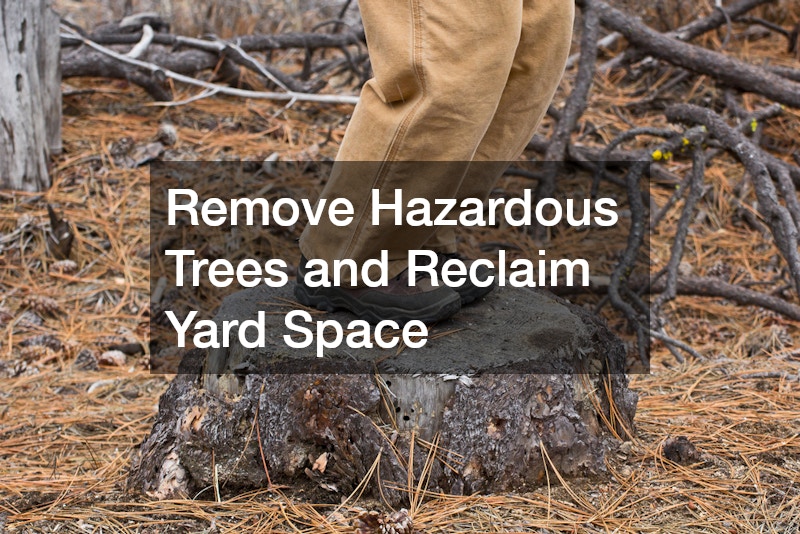
Eliminate Hazardous Stumps and Work With Landscaping Specialists
Once overgrowth is cleared, evaluate the health and placement of your mature trees and shrubs. While large, healthy trees add immense character, shade, and property value, diseased, damaged, or poorly placed trees can actively hinder your home’s curb appeal. A dying tree with sparse foliage creates an unsightly, ominous focal point, while trees planted too close to the foundation can block natural light, drop continuous sap on roof shingles, and obscure architectural features.
Stump removal is another crucial step in reclaiming front yard aesthetics. Old tree stumps rotting in the lawn are not only tripping hazards and lawnmower obstacles, but they also attract wood-boring insects like termites and carpenter ants to your property. Grinding down old stumps below the soil surface allows you to backfill the area with topsoil and reseed grass, creating a seamless, unbroken expanse of green lawn.
Consider these strategic steps when planning your front yard layout:
- Identify structural hazards: Look for trees with hollow trunks, large fungal growths near the root base, or heavy limbs leaning precariously over your roofline or driveway.
- Select native plant species: Choose local plants for new garden beds; native species require significantly less water, fertilizer, and pest management to thrive.
- Incorporate layered height: Arrange plants with taller shrubs in the back near the foundation, medium perennials in the middle, and low groundcovers along the front border.
- Add functional path lighting: Install solar or low-voltage LED pathway lights along your front walk to guide visitors and add warmth to your home’s evening silhouette.
When dealing with large, compromised trees near power lines or structures, arranging safe, professional tree removal is essential to prevent catastrophic storm damage and instantly open up your property’s sightlines. For the design and installation phase, partnering with local landscape contractors allows you to build a cohesive, budget-conscious landscape plan that incorporates proper soil preparation, efficient drip irrigation, and drought-tolerant plant selections built to last.
Restore Driveways and Entry Walkways
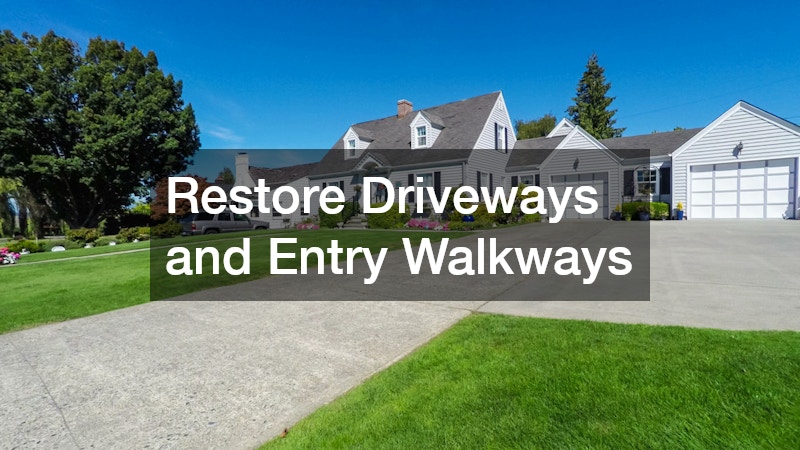
Pressure Wash Surfaces, Seal Cracks, and Smooth Out Access Paths
The approach to your home—your driveway, front walkway, and porch steps—guides visitors straight to your front door. Because these hardscape surfaces cover a large percentage of your front yard footprint, their condition heavily impacts your overall curb appeal. Cracked asphalt, oil-stained concrete, and weeds sprouting through expansion joints make an entry sequence feel aged and uncared for.
A deep surface cleaning is the fastest, most dramatic way to revitalize hardscapes. Renting a commercial-grade pressure washer for an afternoon allows you to blast away years of accumulated engine oil, tire marks, mildew, and ground-in dirt. Watching dark, weathered concrete turn back to its original bright white state is one of the most satisfying and instantly gratifying budget upgrades available.
Follow this systematic checklist to restore your hardscape surfaces:
- Scrub oil and grease spots: Apply a specialized degreaser or poultice to engine oil stains on concrete before pressure washing to pull deeply embedded oils out of the porous stone.
- Kill weeds in pavement seams: Spray vinegar or targeted weed killer into expansion joints and pavement cracks, then sweep away dead organic debris.
- Fill asphalt surface cracks: Use rubberized cold-pour asphalt crack filler to seal hairline fractures and stop water from penetrating below the surface, where freeze-thaw cycles cause potholes.
- Apply dark sealcoat to asphalt: Roll a fresh coat of acrylic or coal-tar asphalt sealer over your driveway to restore a uniform, jet-black finish that looks brand new.
While minor surface cracks are easily patched by homeowners, extensive spiderweb cracking, sunken concrete slabs, or large potholes indicate base failure that requires heavy-duty intervention. Executing timely driveway repair prevents water from eroding the underlying soil base further. For severely deteriorated surfaces, consulting experienced paving contractors allows you to explore cost-effective options like asphalt resurfacing or targeted panel replacement, restoring a smooth, durable entry path without the cost of a full excavation.
Revitalize the Exterior Facade and Wall Surfaces
Update House Colors, Refresh Siding, and Accent the Front Door
Your home’s facade is the main canvas of your exterior aesthetic. Over time, UV rays fade paint, winter moisture encourages mildew growth on siding, and chalky oxidation dulls color vibrance. Restoring the exterior walls does not necessarily mean paying for an expensive total siding replacement; in many cases, a combination of thorough cleaning and strategic paint touches works wonders.
Start with a gentle soft-wash of your house siding. Unlike high-pressure washing, which can force water behind vinyl panels or damage wood grain, soft-washing uses low pressure combined with environmentally safe cleaning solutions to dissolve mold, mildew, and atmospheric soot. Once the surface is clean, turn your attention to high-impact accent areas like the front door, window shutters, and garage doors.
Consider these high-return color and trim upgrades:
- Paint the front door a bold color: A front door painted in a contrasting shade—such as deep navy, classic cranberry red, or rich forest green—creates an inviting focal point that grounds the entire facade.
- Upgrade door hardware and house numbers: Replace outdated brass locksets and small house numbers with modern, oversized matte black or brushed nickel hardware that can be read easily from the street.
- Refresh window shutters: Repaint faded window shutters in a dark, saturated tone to frame your windows crisply against lighter siding colors.
- Add architectural accents: Install simple decorative trim molding around your entry surround, or add crisp white window box planters filled with cascading flowers.
If your wood siding is peeling or your stucco is faded, investing in professional exterior painting delivers one of the highest returns on investment of any home improvement project, providing a durable weather shield and a modern color scheme. If sections of your exterior are damaged beyond what paint can fix, working with expert siding services allows you to repair rotted corner boards, replace cracked vinyl panels, or add stone veneer accents around the entryway economically.
Repair and Clean the Roofline for a Polished Finish
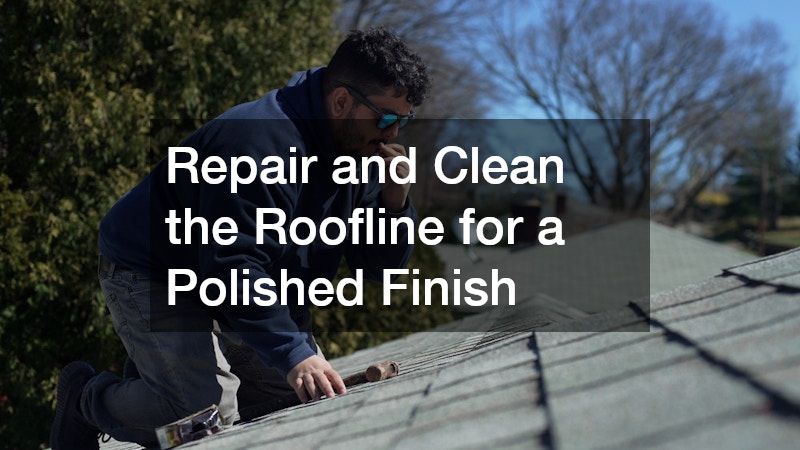
Clear Roof Debris, Fix Damaged Shingles, and Clean Gutters
The roofline forms the top frame of your home’s exterior image. A roof covered in black algae streaks, missing shingles, or sagging, leaf-filled gutters instantly drags down the visual appeal of an otherwise immaculate property. Furthermore, roof and gutter neglect leads directly to interior water leaks, fascia rot, and foundation erosion, making roofline maintenance both an aesthetic and a structural priority.
Start by addressing your gutter system. Clogged gutters overflow during rainstorms, leaving unsightly dark streak marks down the front of your siding and creating muddy trenches in your garden beds below. Scoop out trapped leaves and flush downspouts with a hose to ensure water flows freely away from the home. Once gutters are clear inside, use a mild detergent and a soft scrub brush to wipe away “tiger striping”—the dark electrostatic dirt lines that form on the outside face of white aluminum gutters.
Take these actionable steps to polish your roofline safely:
- Remove roof surface debris: Use a roof rake or soft broom to clear accumulated pine needles, leaves, and small twigs from roof valleys and behind chimneys.
- Treat black algae streaks: Spray a specialized, roof-safe chemical wash on dark streaks caused by Gloeocapsa magma algae to gently dissolve stains without washing away protective shingle granules.
- Inspect fascia and soffit boards: Look for signs of peeling paint, wood rot, or animal entry points along the roof eaves, and repainting or sealing gaps as needed.
- Straighten sagging gutter runs: Replace bent gutter hangers and re-secure loose spikes so gutter lines run straight and true along the roofline.
While clearing low gutters is manageable for homeowners, working at roof heights poses significant safety risks. Addressing lifted flashings, cracked vent boots, or missing shingles through timely roof repairs prevents small leaks from rotting the structural plywood deck underneath. Hiring a certified roofing company to perform a safety inspection, replace damaged shingles, and treat moss accumulation ensures your roof remains watertight, structurally sound, and visually pristine for years to come.
Conclusion
Elevating your home’s curb appeal does not require a massive renovation budget or complicated architectural changes. By breaking your exterior makeover into manageable, targeted projects—refreshing garden beds, cleaning hardscapes, brightening your facade, and maintaining your roofline—you can achieve a dramatic transformation that turns heads in your neighborhood.
The key to successful budget-friendly upgrades is striking a smart balance between do-it-yourself effort and specialized trade expertise. Simple tasks like edging lawn borders, pressure washing walkways, and painting your front door yield massive visual returns for minimal financial outlay. For larger structural or safety-sensitive tasks, relying on qualified professionals ensures the job is done safely, correctly, and durably. Pick one high-impact project to tackle this weekend, and take the first satisfying step toward creating an exterior you are proud to call home.
